

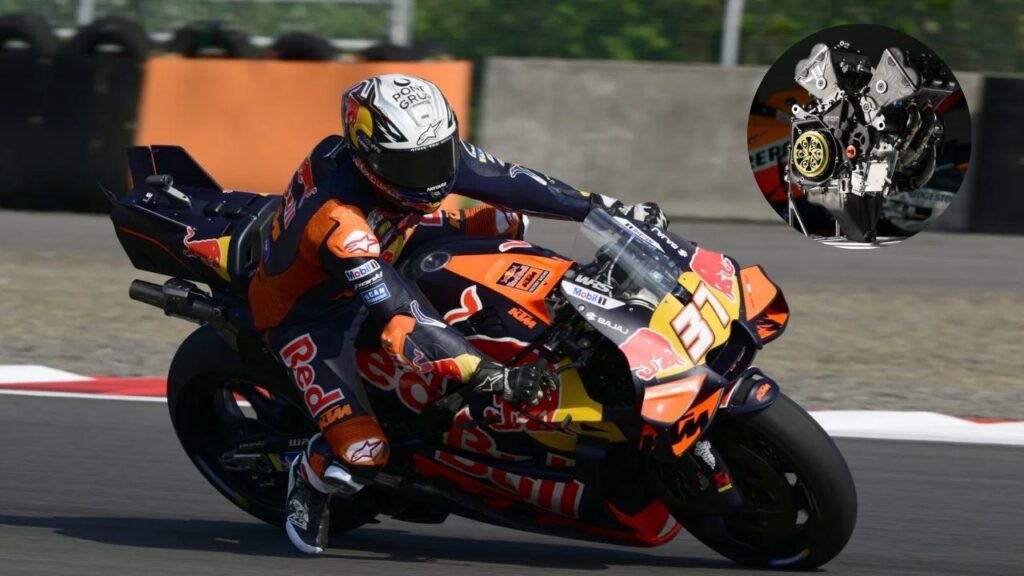
KTM has taken an early and decisive step into MotoGP’s next technical era by becoming the first manufacturer to run its new 850 cc engine on track. The Austrian marque quietly conducted a private test at the Jerez circuit in Spain, with test rider Pol Espargaro sharing the first public glimpse through a social media video.
The footage, which shows the prototype KTM thundering down the start finish straight, provides more than just an audio teaser. It signals that KTM is already deep into development for the 2027 MotoGP regulations, which will introduce smaller engines, reduced aerodynamics and new control components for the entire grid.
At a time when there had been speculation about KTM’s long term future in MotoGP, this test strongly reaffirms the brand’s commitment to the championship and its intention to be competitive from day one of the new rules cycle.
KTM Becomes The First To Run A 2027 Spec 850 cc Engine
KTM had already made headlines in October when it became the first MotoGP manufacturer to unveil an 850 cc engine concept for 2027. However, all teams were initially barred from on track testing as part of cost control measures.
That changed on November 17 when the restriction was officially lifted. KTM moved quickly. Soon after, Pol Espargaro headed to Jerez for a private test session, where the new engine was installed in a prototype chassis and run in real track conditions for the first time.
Espargaro later posted an Instagram video of the run, capturing the moment the bike fired up and rocketed down the straight on Pirelli tyres. His caption read, “Hear that? The engine just fired up. Our 850 cc is alive, and it is ready to race 2027.”
The clip was quickly picked up and shared by KTM Racing and Tech3 rider Maverick Vinales, underscoring the internal excitement around this early development milestone.
Short Summary Table
Key Detail |
Information |
|---|---|
Manufacturer |
KTM |
New Engine |
850 cc MotoGP prototype |
Test Location |
Jerez Circuit, Spain |
Test Rider |
Pol Espargaro |
Target Season |
2027 MotoGP season |
Regulatory Change |
Shift from 1000 cc to 850 cc, reduced aero, no ride height devices |
Tyre Supplier From 2027 |
Pirelli |
First To Test 850 cc On Track |
KTM |
Key Confirmation |
KTM remains committed to MotoGP |
Official Site |
Sound And Character Of The New 850 cc Prototype
One of the first things fans noticed in the video was the sound of the new bike. Despite a reduction in capacity from 1000 cc to 850 cc, the engine note has remained aggressive and engaging.
From the brief footage, the prototype still carries the high revving, raw character that MotoGP followers expect. The exhaust tone reassured many that, even with smaller engines and tighter regulations, the sport’s visceral appeal is not going away.
While KTM has not disclosed exact performance figures or technical details, the test clearly demonstrates that the 850 cc unit is already at a stage where it can handle full throttle runs and early system checks. More detailed evaluations of power delivery, rideability and reliability will follow in subsequent tests.
Limited Information, But Clear Intent
KTM has kept wider information about the test under wraps. There is no official confirmation regarding the number of laps completed, the test programme structure, or whether additional components such as new chassis parts or electronics configurations were evaluated.
However, the brand did not need a detailed press release to send its message. The simple fact that the 850 cc prototype has run at Jerez is enough to show that KTM wants to lead development for the 2027 ruleset rather than react to others.
By being the first to put a 2027 spec engine on track, KTM gains a valuable data advantage. Early tests allow engineers to understand cooling requirements, fuel consumption, drivability and tyre behaviour long before rivals, which can translate into a stronger baseline package when the new era begins.
Context: MotoGP’s 2027 Regulations
The decision to develop and test an 850 cc engine is directly tied to MotoGP’s upcoming regulation overhaul scheduled for 2027. For years, the premier class has run 1000 cc four stroke engines with relatively stable rules, especially since the adoption of a common ECU in 2016.
The last major capacity change came in 2012 when MotoGP switched from 800 cc units back to 1000 cc powerplants. From 2027, the rules will once again reset the technical landscape.
Key changes planned include:
- Engine capacity reduced from 1000 cc to 850 cc
- Reduction in aerodynamic devices and complexity
- A complete ban on ride height devices
- Mandatory use of Pirelli tyres across the grid
These changes are intended to improve racing, reduce speeds slightly for safety, cut costs and place greater emphasis on rider skill. With all manufacturers working on new machines for this era, the race to adapt has already begun, and KTM is currently leading the on track phase.
Addressing Rumours About KTM’s Future In MotoGP
In recent months, there had been rumours suggesting that KTM might consider scaling back or even exiting MotoGP due to financial pressures and broader strategic challenges. The Jerez test goes a long way toward quelling that speculation.
By investing in a brand new engine platform, running early track tests and aligning itself with the 2027 regulations, KTM has effectively confirmed that it plans to stay in MotoGP for the long term.
The visual proof of the 850 cc prototype in action sends a strong message to fans, sponsors and the wider paddock. KTM is not winding down its project. Instead, it is positioning itself at the forefront of the next chapter of the sport.
The Role Of Pol Espargaro In KTM’s Development
Pol Espargaro has played an important role in KTM’s MotoGP journey, both as a race rider in previous seasons and now as a key test rider. His experience with different manufacturers and familiarity with KTM machinery make him well suited for early development work.
His presence at Jerez highlights his continued importance in shaping the feel and behaviour of the next generation bike. Espargaro’s feedback will be critical as KTM refines engine mapping, chassis balance and electronics to suit the new regulations.
The involvement of current MotoGP rider Maverick Vinales, who reacted enthusiastically to the test on social media, suggests that KTM’s wider rider group is invested in the success of the 2027 project.
What Comes Next For KTM And The 850 cc Project
While KTM has not publicly announced its full testing schedule, it is widely expected that more private and possibly official test days will follow as MotoGP edges closer to 2027.
Future tests will likely focus on:
- Longer runs to validate reliability and cooling
- Fuel consumption assessments under race style conditions
- Integration of the new engine with updated aerodynamics and chassis layouts
- Tuning of electronics to suit the 850 cc power delivery and Pirelli tyres
As other manufacturers bring their own 850 cc prototypes to the track, KTM’s early start could provide a strategic advantage. The data already collected will allow the Mattighofen based brand to make informed design decisions while competitors are still in the initial shakedown phase.
Frequently Asked Questions
Q1. What engine is KTM testing for the 2027 MotoGP season
KTM is testing a new 850 cc prototype engine designed to meet the 2027 MotoGP regulations, which will reduce capacity from 1000 cc to 850 cc.
Q2. Where did KTM test the new 850 cc MotoGP engine
The new engine was tested during a private session at the Jerez circuit in Spain, with Pol Espargaro riding the prototype.
Q3. Why are MotoGP engines changing from 1000 cc to 850 cc in 2027
The shift to 850 cc engines is part of a larger regulation overhaul aimed at improving safety, reducing speeds slightly, cutting costs and making racing more competitive while highlighting rider skill.
Q4. Does this test confirm KTM’s commitment to MotoGP
Yes. By investing in an all new engine platform and running early track tests, KTM has strongly signalled that it intends to remain in MotoGP and be competitive in the upcoming 2027 rules era.
Q5. What other changes are coming to MotoGP in 2027 besides the engine capacity reduction
Along with the move to 850 cc engines, the 2027 regulations will reduce aerodynamic devices, ban ride height devices and introduce Pirelli as the mandatory tyre supplier for all MotoGP teams.
Conclusion
KTM’s decision to test its 850 cc MotoGP engine at Jerez marks a pivotal moment in the build up to the 2027 season. By becoming the first manufacturer to run a 2027 spec engine on track, KTM has underlined not only its technical ambition but also its commitment to the future of the sport.
The early shakedown, captured and shared by Pol Espargaro, reveals a prototype that already carries the aggressive sound and presence fans associate with MotoGP. It also sends a clear signal that KTM is fully engaged in the new regulatory era that will reshape the championship with smaller engines, reduced aerodynamics and Pirelli tyres.
Though many technical details remain under wraps, one thing is clear. KTM is not waiting for the future to arrive. It is already building it, lap by lap, in preparation for 2027.
For More Information Click HERE